
Block modelling software
Core
GEOREKA is block modelling software that turns 3D geological domains into block models populated with estimated grade, with tetrahedral models as an alternative that follows domain boundaries exactly and needs no sub-blocking.
A block model divides a deposit into cells that each carry attributes such as domain and grade, so tonnage and grade can be calculated and interrogated. In GEOREKA the block model is an output of the geological model rather than a separate build. Choose block model, solid or tetrahedral output with one setting, estimate grade on regular grids or directly on the model, and read tonnage, grade and volume at any cut-off. Block modelling is included in Core.
The block model workflow
From geological model to interrogated block model
- Start from the modelThe block model is an output of the geological model, not a separate build.
- Choose the outputBlock model, triangulated solids or tetrahedral grid, with one setting.
- Populate attributesDomain, estimated grade and density at each block.
- InterrogateTonnage, grade and volume at any cut-off, in real time.
- ExportBlock models, tetrahedral grids and triangulated solids.
OUTPUT CHOICECore
Block, solid or tetrahedral: one setting
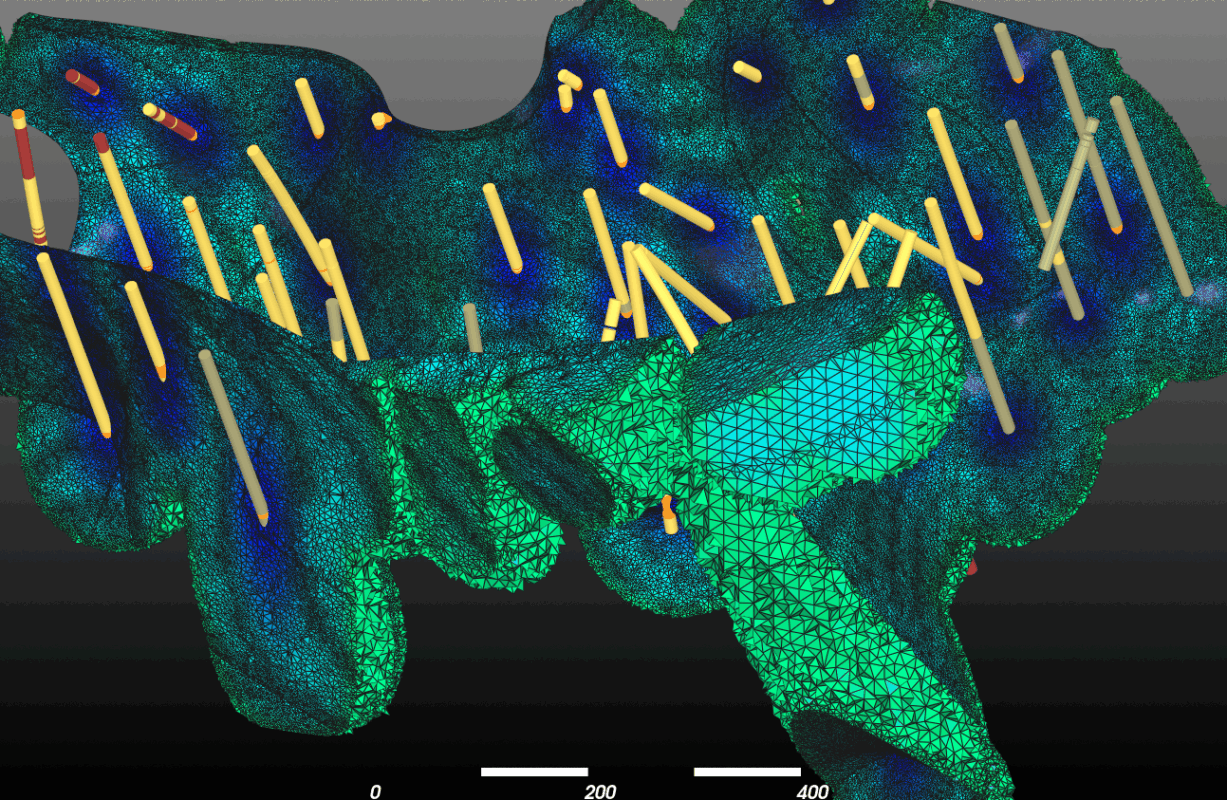
Build the geological model once and choose how it is represented. Regular block models are there when you need them for compatibility or familiar workflows, set to a block size and extent that suits your drillhole spacing and oriented to follow the strike and dip of the deposit. Tetrahedral and solid output are there when you want volumes that follow the geology exactly.
- Block model, triangulated solids or tetrahedral grid
- Switch between them without rebuilding the model
- Domain-coded blocks inherited from the geological model
SUB-BLOCKINGCore
Why sub-blocking is usually unnecessary
A block model approximates a curved geological boundary with rectangular cells. Sub-blocking splits the cells along the boundary into smaller ones to improve the volume match, at the cost of many more blocks. GEOREKA’s tetrahedral output takes a different route: the mesh conforms to the domain boundary, so the boundary is represented exactly and no sub-blocking is needed.
| Approach | Boundary | Block count |
|---|---|---|
| Parent blocks only | Stepped approximation | Lowest |
| Sub-blocked model | Closer approximation | Grows with boundary complexity |
| Conforming tetrahedra | Follows the boundary exactly | Set by the mesh, no sub-blocking |
ATTRIBUTESCorePremium
Populate blocks with grade and density
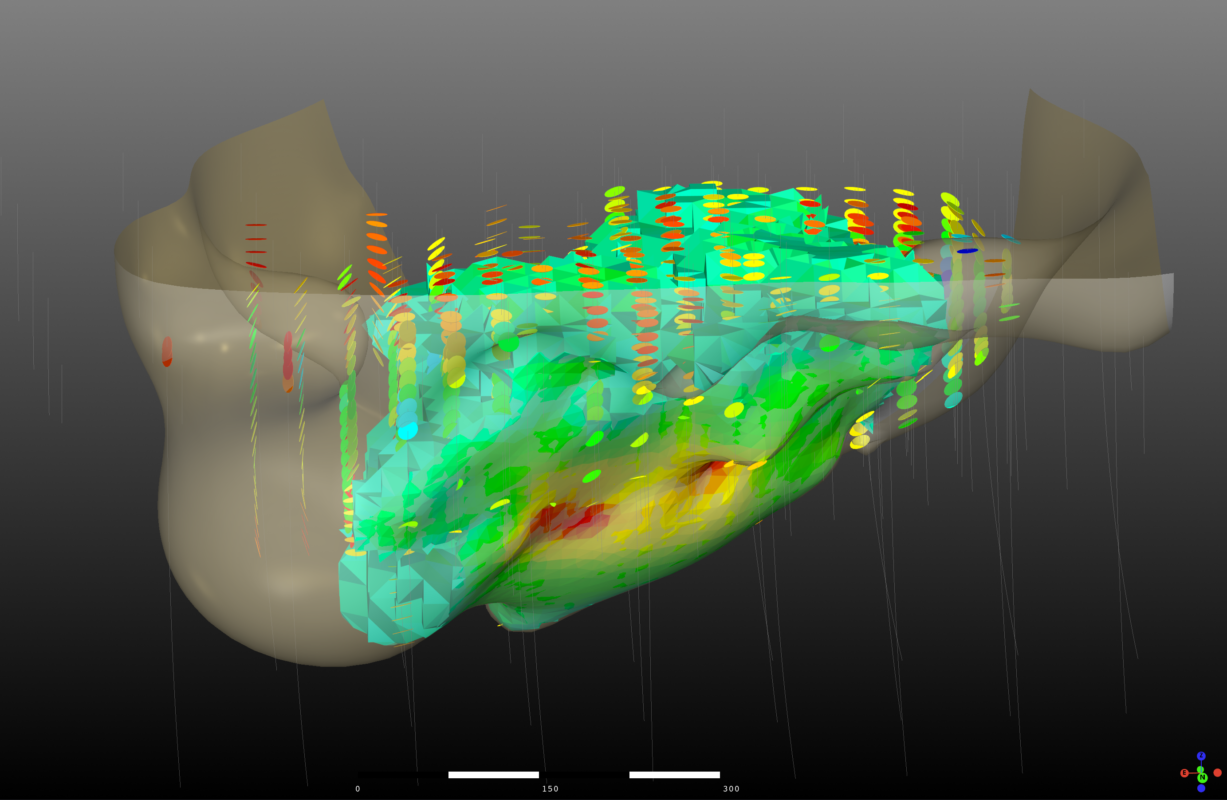
Evaluate on regular grids or directly on the geological model for volume-weighted grade averages. Grades come from IDW, RBF or machine learning regression in Core, and from ordinary Kriging in Premium. Density can be estimated by domain so tonnage follows from volume.
INTERROGATIONCore
Tonnage, grade and volume at any cut-off
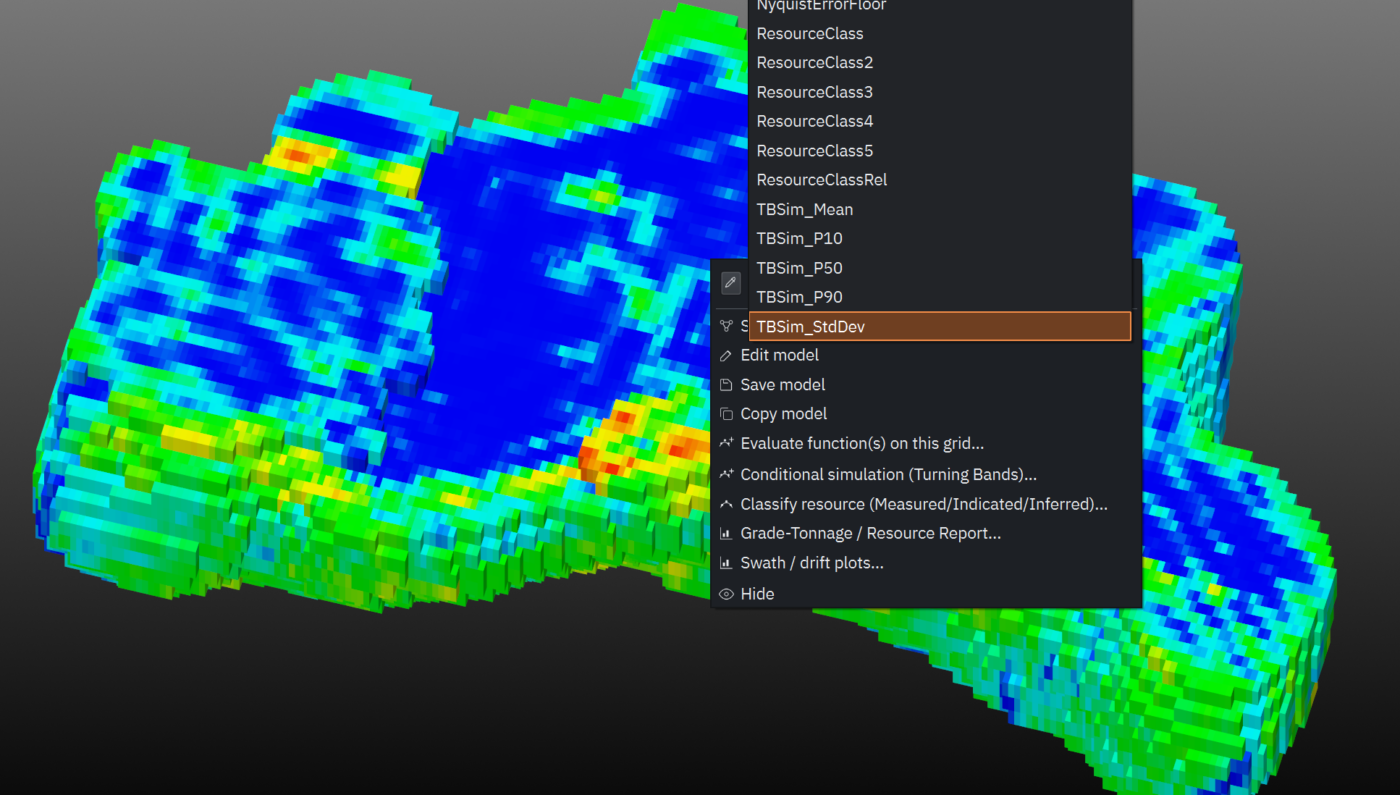
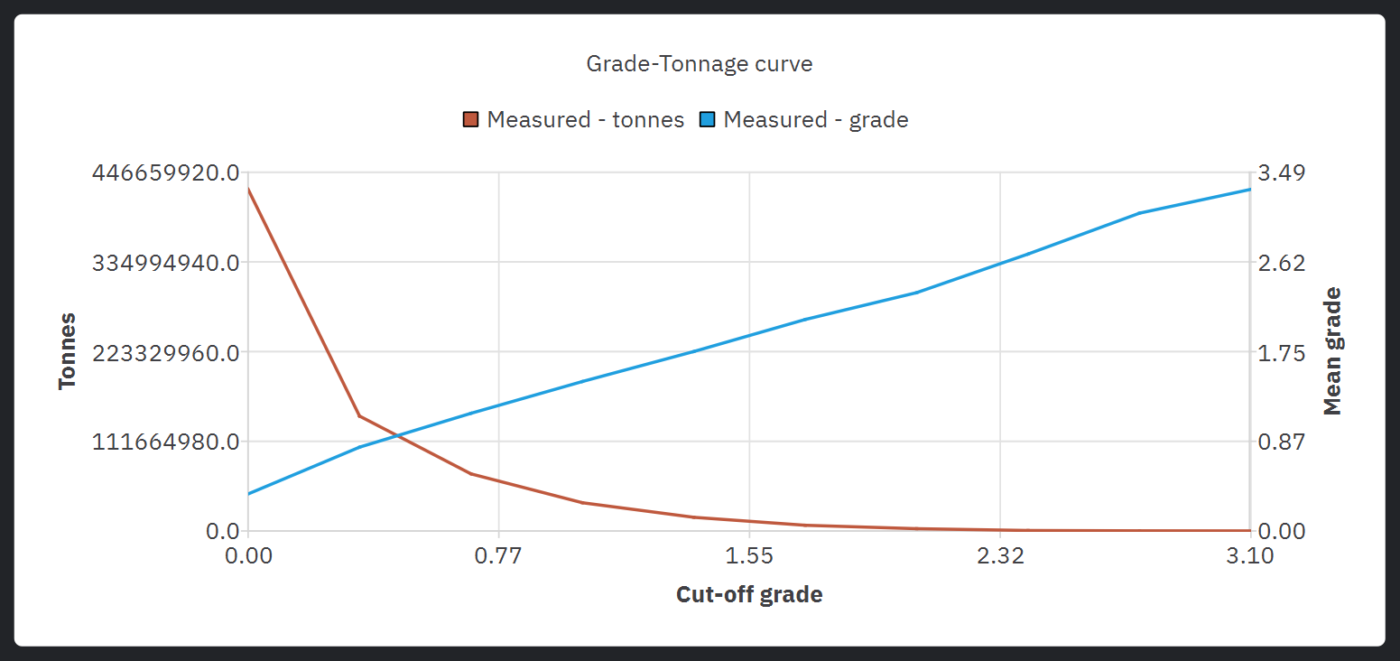
Adjust the cut-off in real time and read tonnage, grade and volume straight from the information panel. View two estimation results at once in the 3D window, and cut sections through the model to inspect blocks in context.
EXPORTCore
Export what you need
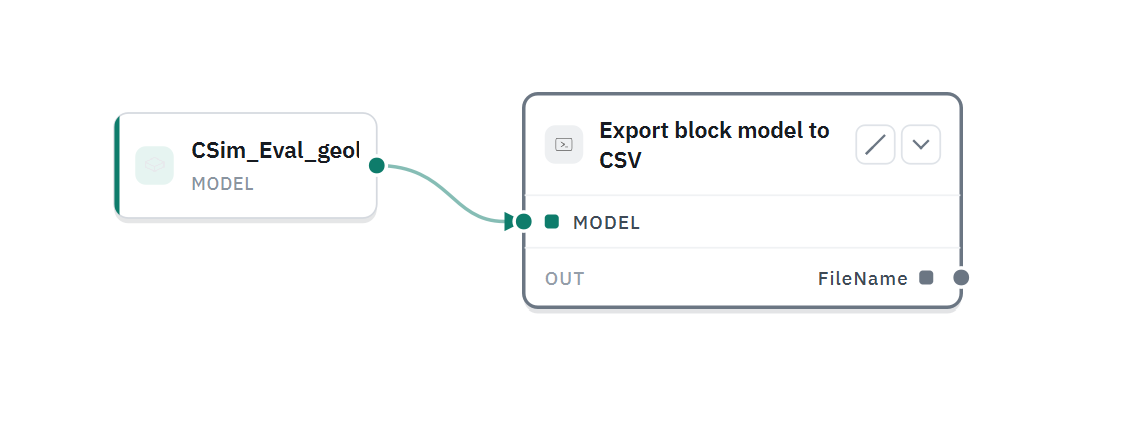
Export tetrahedral grids, triangulated solids and block models for tonnage and volume work, and for geotechnical, geophysics and flow simulation. Block models export to CSV for use in other mining packages.
Licence tiers
Block modelling by tier
| Capability | Core | Premium |
|---|---|---|
| Block, solid and tetrahedral output | Included | Included |
| Populate blocks with IDW, RBF, OK or machine learning regression (SVR) estimates | Included | Included |
| Tonnage, grade and volume at any cut-off | Included | Included |
| Conditional Simulation (Turning Bands) on models | —Not included | Included |
| Grade-tonnage reporting by domain and cut-off, with classification support | —Not included | Included |
| Swath plots to show if estimations follow drillhole means | —Not included | Included |
Related
Continue through the workflow
Geological modelling
Implicit and explicit workflows, true 3D domains, structural modelling and fast model updates.
Resource estimation
Statistics, variography, kriging, validation and grade-tonnage results on the same model.
Questions
Frequently asked questions
What is a block model?
A block model divides a deposit into a regular grid of cells, each carrying attributes such as domain, grade and density, so tonnage and grade can be calculated and interrogated. In GEOREKA it is one of three output types of the geological model.
Do I need sub-blocking in GEOREKA?
Usually not. Tetrahedral output conforms to domain boundaries, so the boundary is represented exactly. If you want a regular block model, you can output one with a single setting.
How are grades assigned to blocks?
Grades are estimated from your drillhole data, either on a regular grid or directly on the geological model for volume-weighted averages. Core uses IDW, RBF or machine learning regression, and Premium adds ordinary kriging.
What block size should I use?
There is no single answer. A common rule of thumb is a block size of roughly a quarter to a half of the drillhole spacing, adjusted for the mining method and the geostatistics. Kriging Neighbourhood Analysis in Premium can help test the effect of block size and search parameters.
Can I export a block model to other software?
Yes. GEOREKA exports block models, tetrahedral grids and triangulated solids. Block models can be exported to CSV.
Get started
Build a block model from your own data.
Import drillholes, build the domains and choose your output. The 14-day trial includes every feature.